International Conference “The Lonesome Meaning”
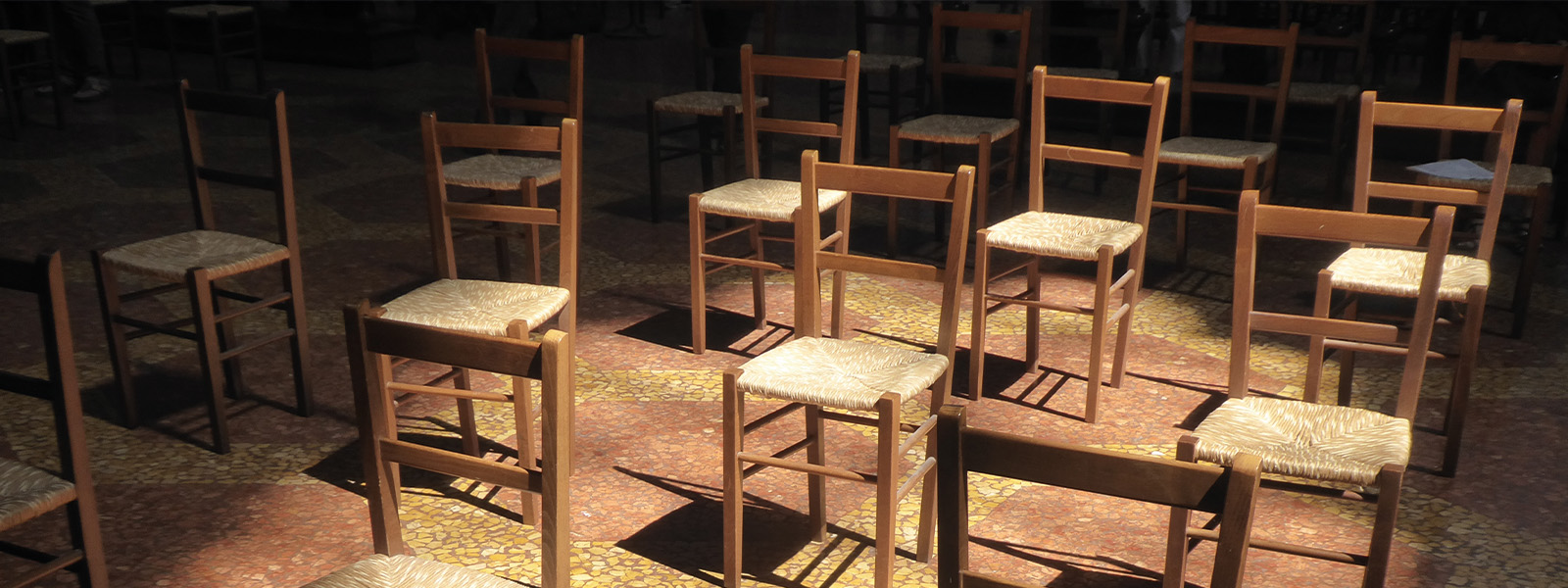
FBK Aula Grande
Fondazione Bruno Kessler - Polo delle Scienze Umane e sociali
Aula Grande
FBK Aula Grande
Fondazione Bruno Kessler - Polo delle Scienze Umane e sociali
Aula Grande
International Conference | “The Lonesome Meaning”
Dec 15 (14:30) – Dec 18 (12:30)
The international conference “The Lonesome Meaning” explores multiple forms of solitude and isolation in contemporary cultures, bringing together religious, ethical, social, and technological perspectives. Through an interdisciplinary approach, it will examine both painful experiences of separation and abandonment and voluntary forms of withdrawal, recollection, and meaning-making, including new scenarios shaped by artificial intelligence and imaginaries of insularity.
Quotations on solitude could be multiplied almost without limit, a fact that itself attests to the universality of this human condition. Solitude and humanity are, in effect, consubstantial; and anyone who has never felt alone may perhaps lack something profoundly human. Perhaps the phenomenon extends even further: non-human animals, and, according to some, plants as well, may suffer from solitude. In human beings, however, solitude becomes language, and thus gives rise to memorable formulations such as the following, instantly recognizable to anyone acquainted with Italian literature:
“Each stands alone upon the heart of the earth,
pierced by a ray of sunlight:
and suddenly it is evening.”
These lines by Salvatore Quasimodo are learnt at school, itself a place in which solitude is certainly experienced: the solitude of teachers, often particularly severe, but also that of boys and girls. Yet at school solitude is still frequently understood as a phase of life, as adolescent melancholy, as a passing spleen. Only through living does one come to understand how deeply solitude belongs to life itself. To speak of solitude is therefore no easy matter, for it means speaking of life. Where, then, should one begin?
By a characteristically semiotic inclination, one may begin with language. Italian possesses the adjectives solo, solitario, isolato, and desolato, all belonging broadly to the same lexical family, but also the rarer, cultivated, and profoundly Italian solingo. The latter conveys the poetic quality of solitude and has accordingly been cherished and employed by poets, beginning with the loneliest of Italian poets, and perhaps of all poets: Giacomo Leopardi.
Other languages divide the semantic field of solitude differently. In English, solitude denotes the condition of being alone, often deliberately sought, whereas loneliness denotes the suffering caused by aloneness. The fact that Italian does not lexicalize this distinction may reveal something of the differing cultural and emotional dispositions of the two languages and the cultures they embody.
As so often happens, German inscribes an entire philosophy of solitude within its lexicon. It distinguishes Einsamkeit, solitude in either its painful or contemplative form; Alleinsein, the simple state of being alone; Vereinsamung, the process of becoming progressively isolated; Abgeschiedenheit, withdrawal and separation from the world, including in a mystical sense; and Verlassenheit, the condition of abandonment, among several further nuances.
Yet the gentlest vocabulary of solitude could perhaps only have emerged from an island—or, rather, from an archipelago. Japanese includes 孤独 (kodoku), profound solitude, often painful or existential; 孤立 (koritsu), objective isolation or separation from a group; 独居 (dokkyō), the material condition of living alone; 独り/一人 (hitori), simply being alone, without necessarily suffering from it; 寂しさ (sabishisa), the affective sense of absence, emptiness, or abandonment; 侘び (wabi), secluded simplicity understood as voluntary poverty and imperfect tranquillity; 引きこもり (hikikomori), prolonged withdrawal from social life, a term now also widely used in the West; and おひとりさま (ohitorisama), a person who independently undertakes activities conventionally shared with others, a term carrying distinctly positive and contemporary connotations.
The untranslatability of solitude is perhaps expressed most fully, however, in a single Portuguese word: saudade. More than any other term, it poetically captures the metaphysics of solitude as the presence of an absence—an absence which, paradoxically, continues to act emotionally upon the subject precisely by virtue of its disappearance.
From this linguistic network, attention must turn to the texts of solitude, understood across different languages and systems of signs, from verbal narrative to spatial organization. Particular emphasis will be placed on the thematic domain which, broadly conceived, constitutes the institutional focus of the Centre for Religious Studies at the Bruno Kessler Foundation: religions and religiously informed ethics.
There is a great deal of solitude in religion. Religions address it and, in a certain sense, seek to remedy it through communal life, ritual, and sometimes through the very possibility of mystical companionship with transcendence. At the same time, they frequently invite human beings to inhabit solitude, albeit temporarily, either in order to discover within it a different light upon themselves and the world, or in order to encounter the numinous and the divine. Anchorites, ascetics, and hermits, followed by the various forms of the coenobite, the stylite, and the dendrite: the religious lexicon, too, abounds in names for solitude.
At ISR, the Centre for Religious Studies, religion is never treated as a point of arrival, but rather as a point of departure from which to engage with society through the study of its beliefs and rituals. In this respect, one must not overlook the fact that the Centre’s institutional home is the Bruno Kessler Foundation, a setting in which solitude may be explored from several complementary perspectives.
One of the most urgent today concerns its relationship with technology. As examined in the Centre’s 2026 annual seminar devoted to this topic, technologies—and artificial intelligence in particular, which increasingly occupies a central place in the Foundation’s research agenda—may generate new forms of solitude before screens, chatbots, and virtual environments. Yet the same technologies may also alleviate the solitude of those who already suffer from it, through those very screens, chatbots, and virtual environments.
One may think of two extremes: on the one hand, the hikikomori, secluded in their rooms before a computer; on the other, the terminally ill patient who finds in virtual reality an effective form of palliative care, capable of reopening, however partially, a relation with the world.
A further powerful dimension of reflection on solitude, implicit in a place such as Trento, derives from its geography. Here solitude may be interpreted either as an orographic destiny—a condition of splendid isolation among the mountains—or as a deliberately cultivated and sophisticated form of autonomy.
The shades of solitude are therefore innumerable. The final ISR conference of 2026, to be held in Trento in the Great Hall of the Bruno Kessler Foundation at Via Santa Croce 77, will explore some of them, while inevitably leaving others aside.
One particular shade perhaps captures more fully than any other the paradox of a condition that human beings seek with all their strength to escape—solitude as desolation and abandonment—and yet also seek with equal intensity in order to recover themselves: solitude as a return to one’s own center and one’s own voice.
This is the musical dimension of solitude, embodied above all in the figure of the soloist—the instrumentalist, the singer, but also the composer—in whom Quasimodo’s verbal image seems to acquire perfect form:
“Each stands alone upon the heart of the earth,
pierced by a ray of sunlight:
and suddenly it is evening.”
The curtain falls upon life and upon the human condition, and being alone proves to be one of its essential givens. We are born and we die in solitude, even though societies, and religions above all, seek to weave their languages and signs around these two solitudes.
And yet, in the swift turning of this brief day between life and death, there sometimes comes a ray of light: a transverberation, an encounter with radiance, a note of extraordinary beauty.
It is this note that we shall seek in Trento, at the Bruno Kessler Foundation, from 15 to 18 December 2026.
Cycle of Seminars: “Solitude and Communion in Religion and Ethics“
Scientific coordination: Massimo Leone, FBK-ISR
***
Image: AdobeStock_518968971
Contacts
Organizers
Supporters
 The initiative was also realized thanks to the contribution of "Direzione generale Educazione, ricerca e istituti culturali" of the Ministry of Culture.